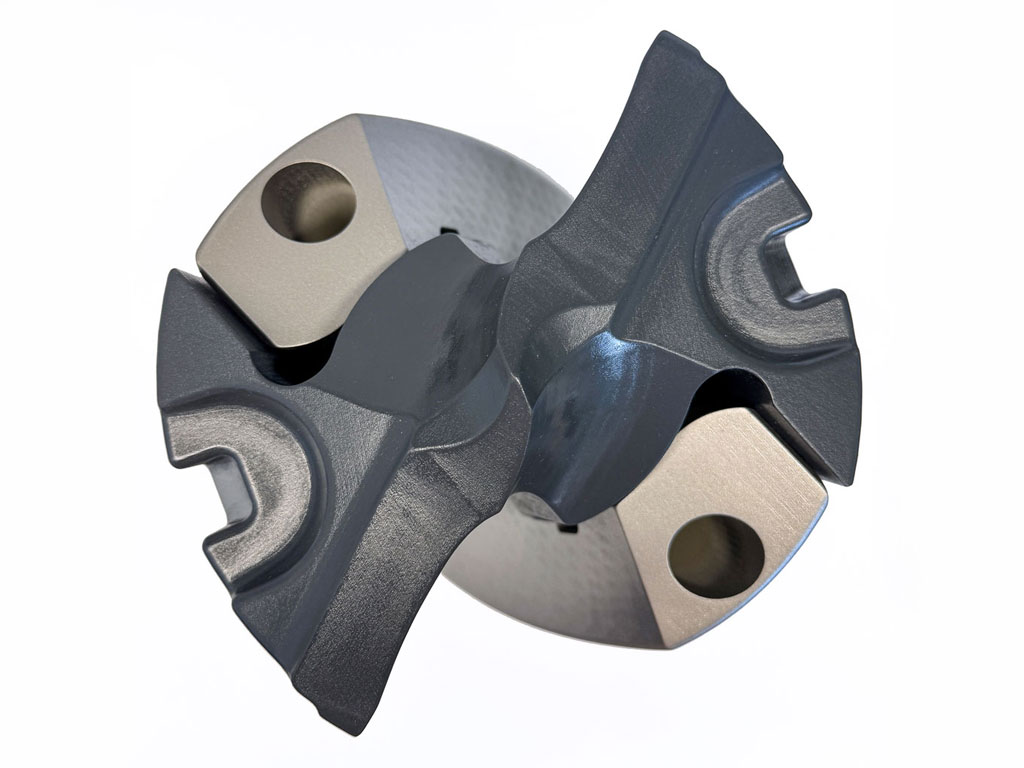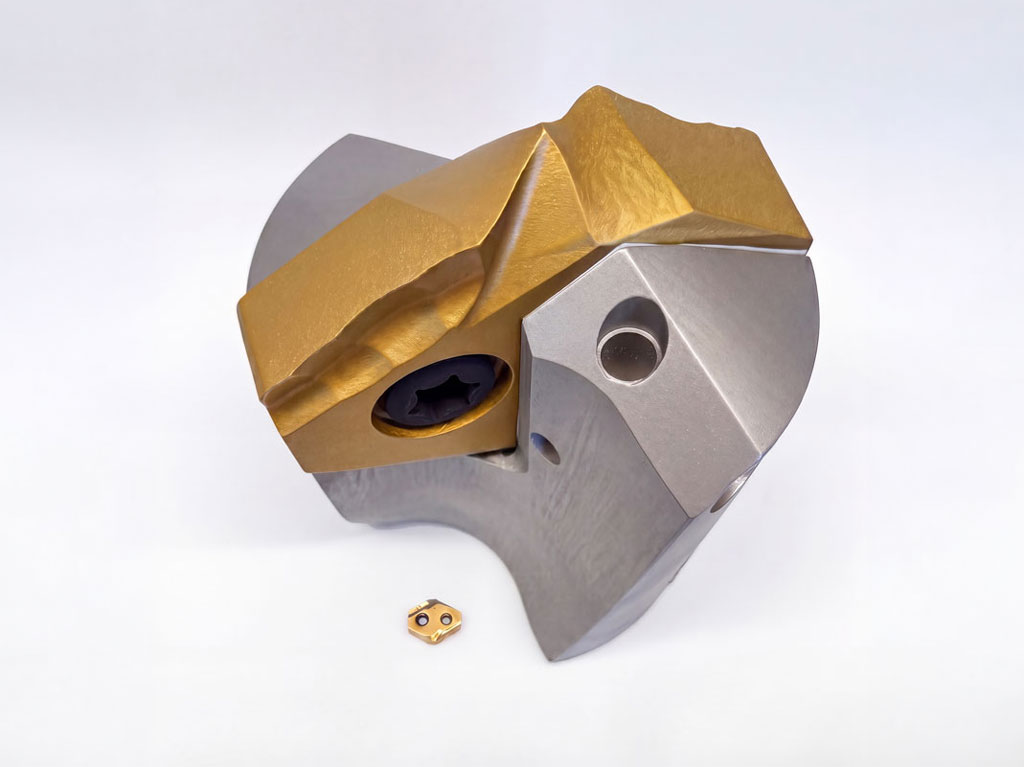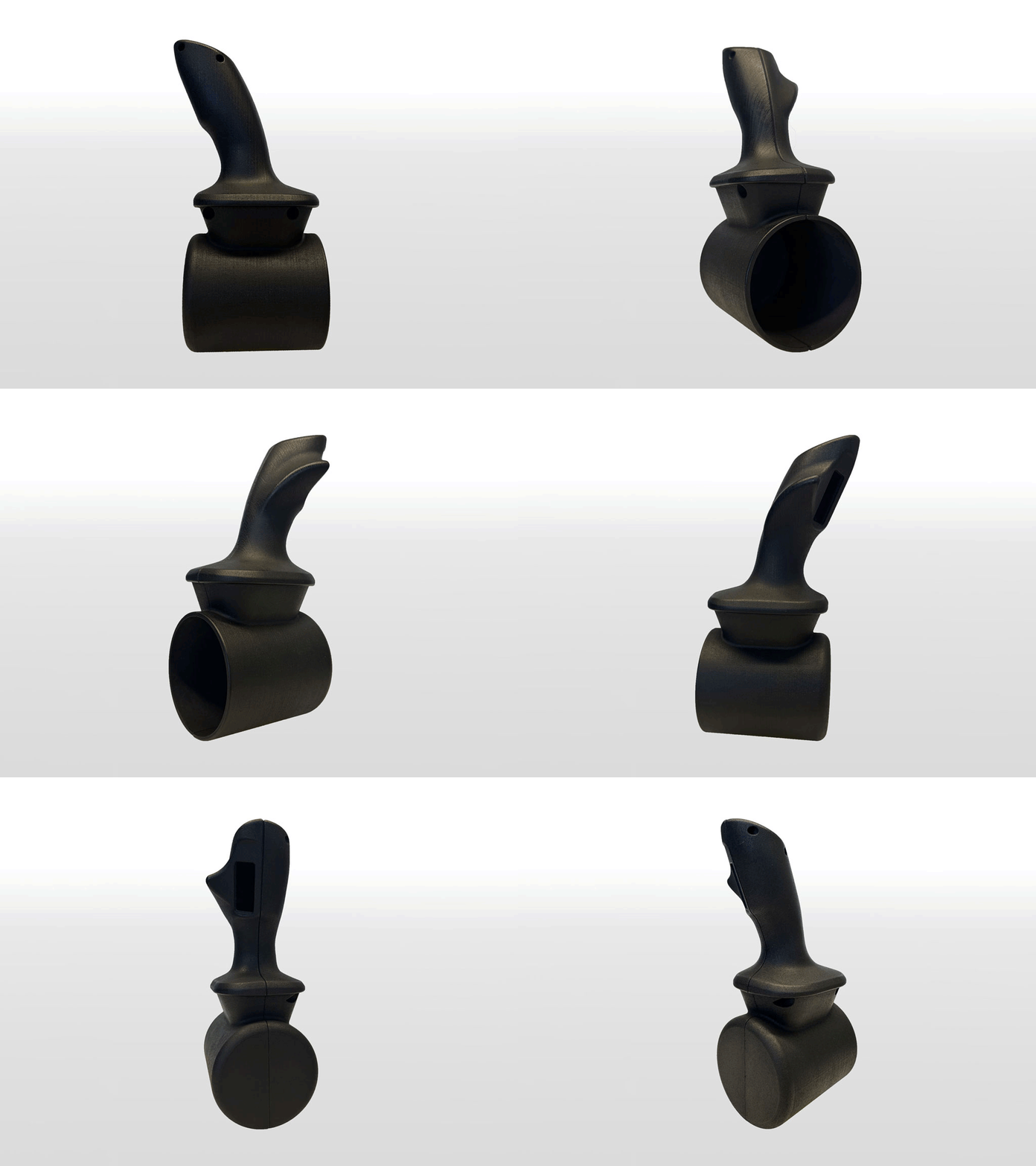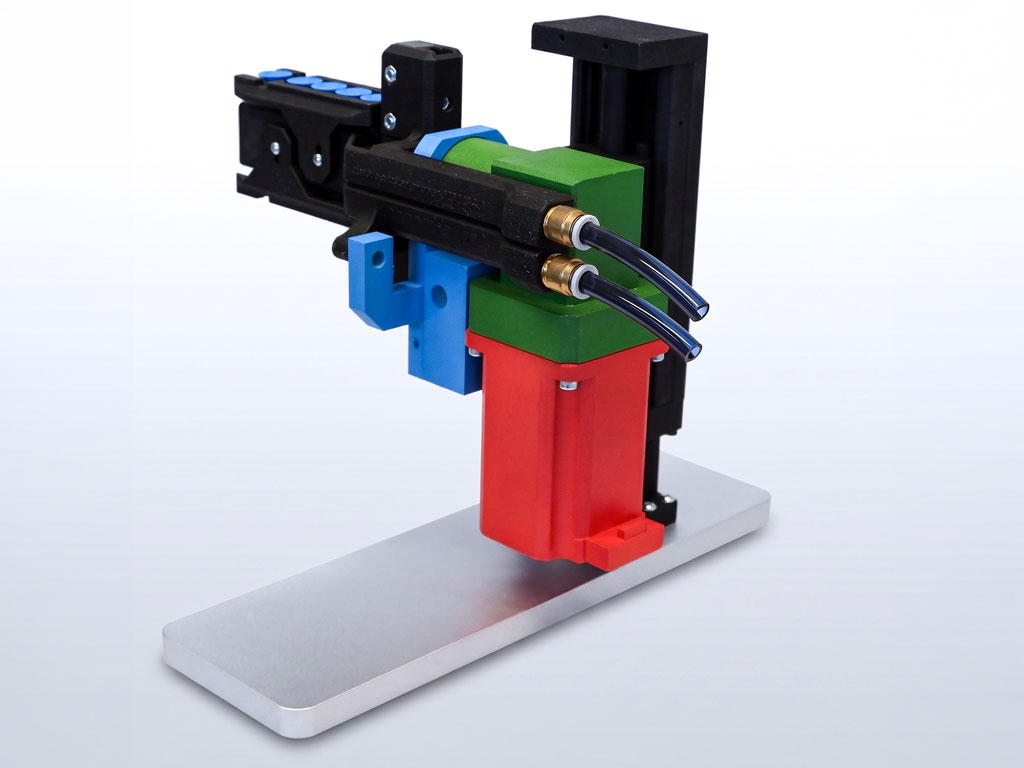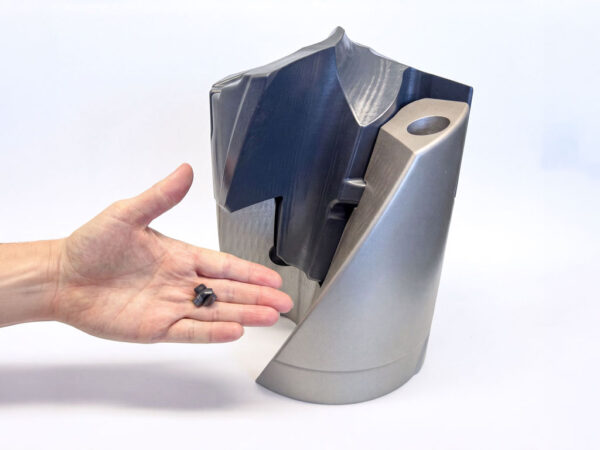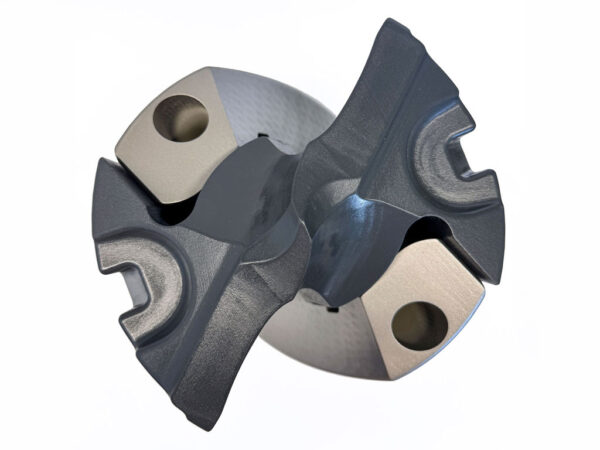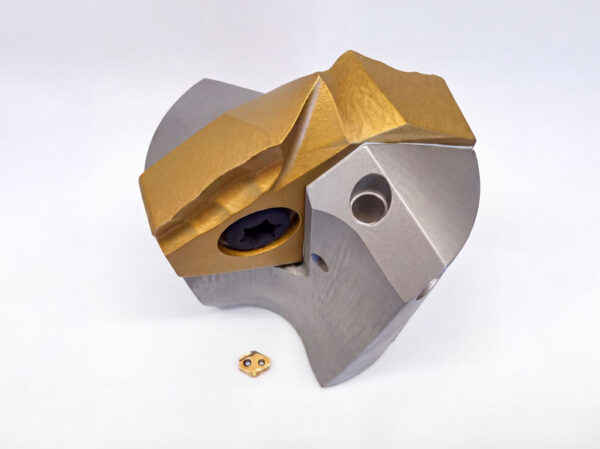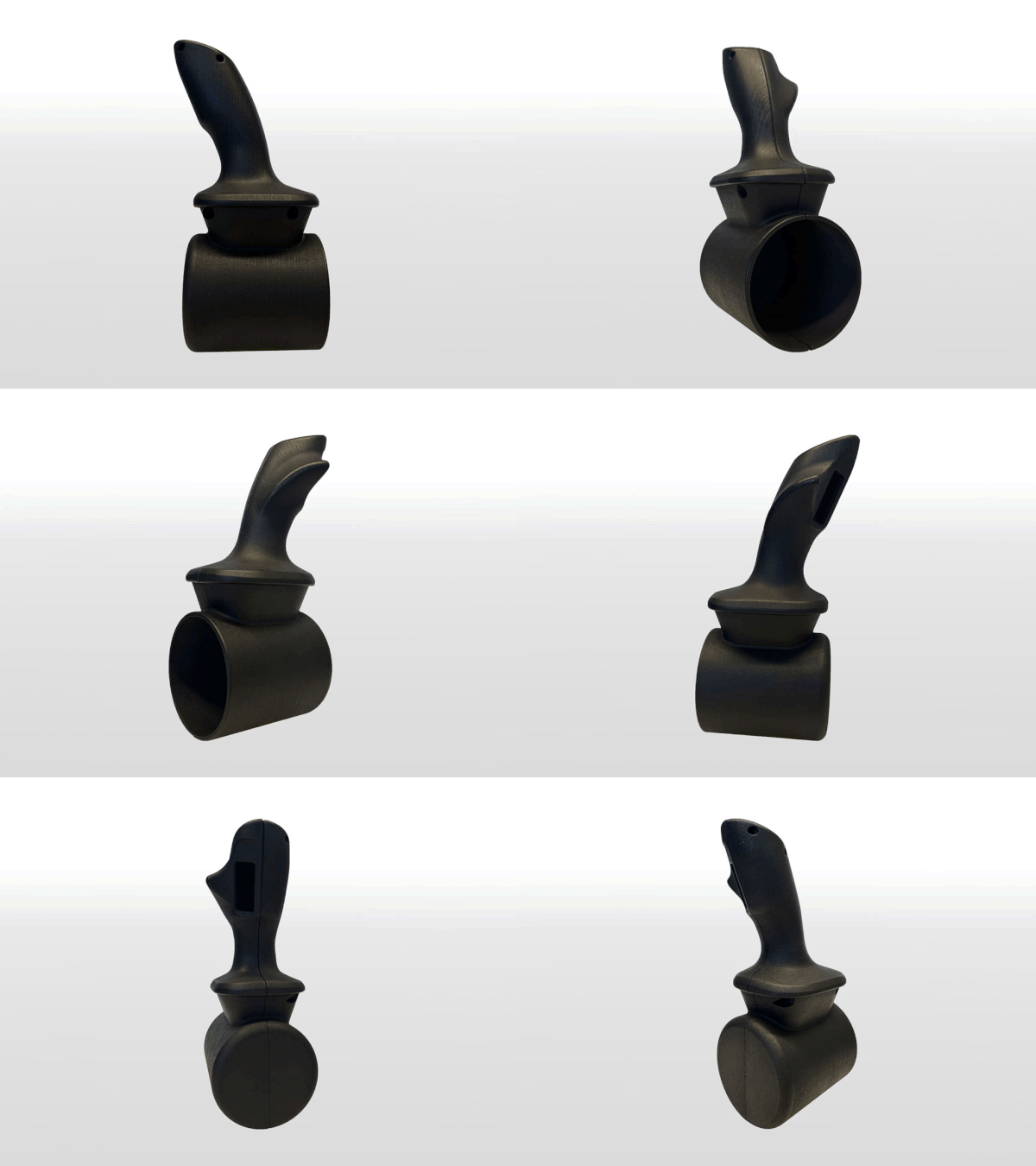
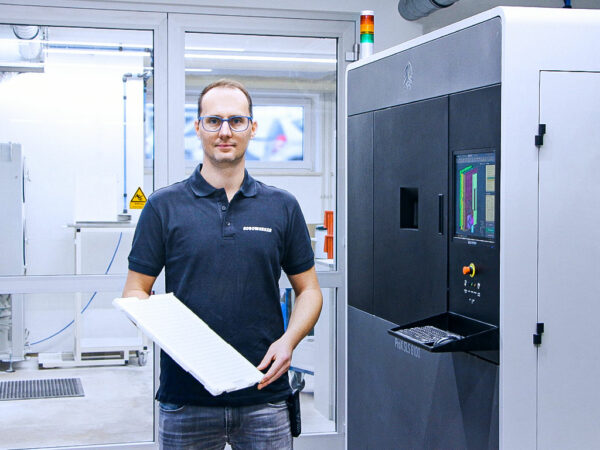
At our in-house 3D printing center, we manufacture production equipment and plastic components using advanced additive manufacturing technologies – with precision, efficiency and cost-effectiveness. Our solutions are developed both for our own production needs and for our customers.
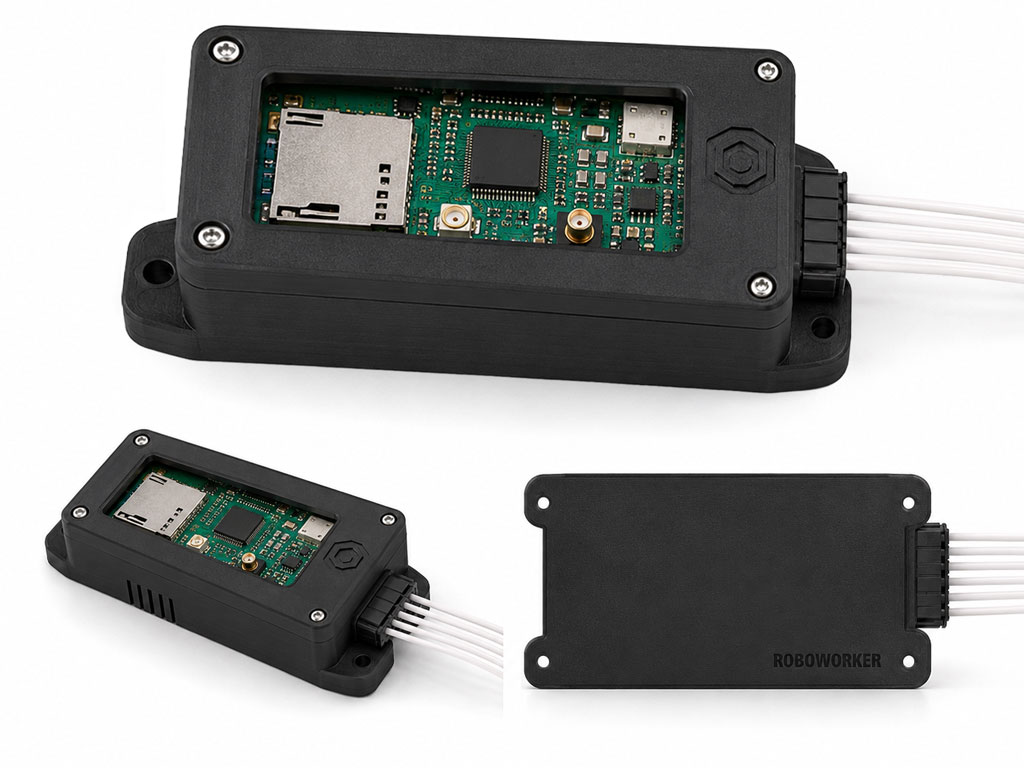
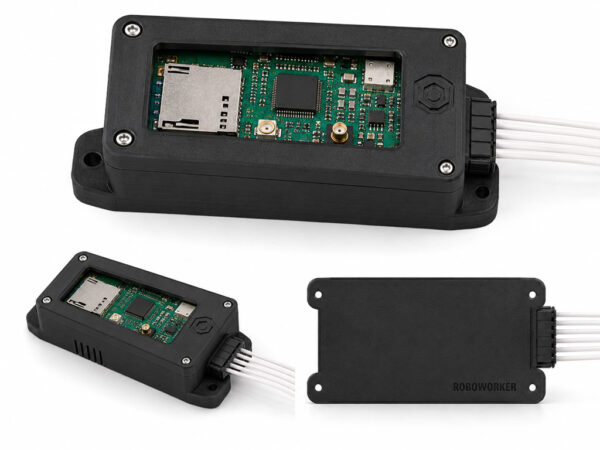
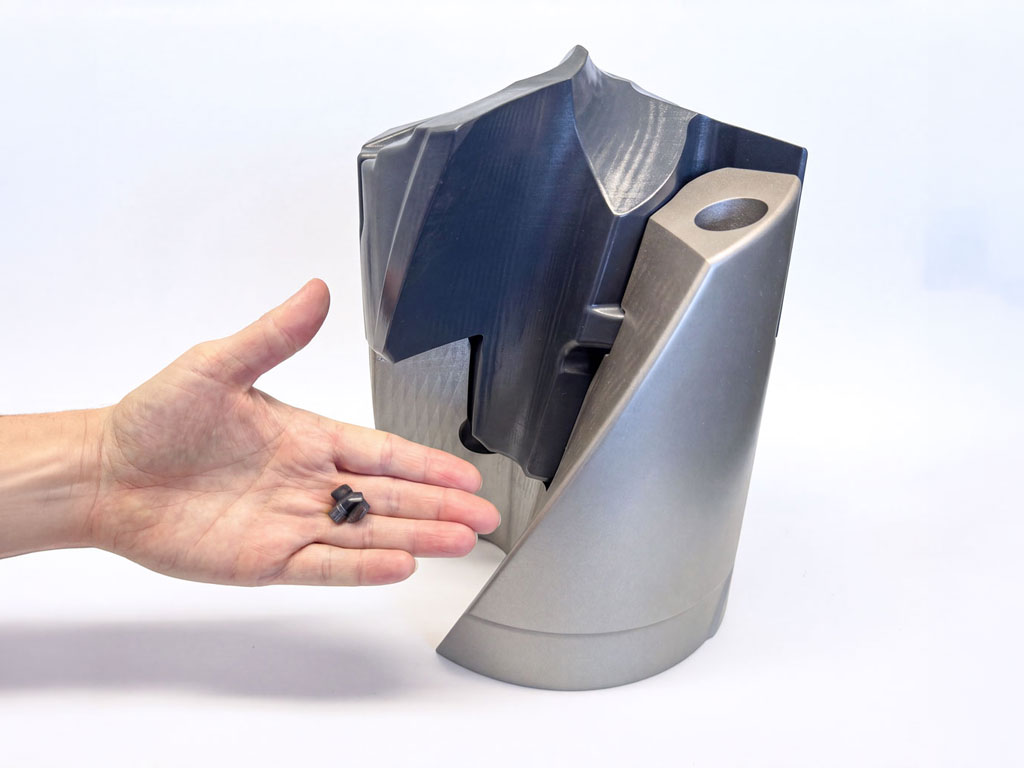
Additive manufacturing opens up new possibilities in design and product development. Our experienced design engineers leverage the high design freedom of 3D printing to develop function-optimized components – for example, for positioning applications, complex geometries based on mathematical models, or with integrated DMC or RFID identification.
Our ready-to-install components help increase the productivity and quality of your manufacturing processes. Through targeted design optimization, we implement individual requirements economically and precisely.
With our full-service support, we provide expert consultation, fast implementation and maximum reliability – competent, flexible and future-oriented.
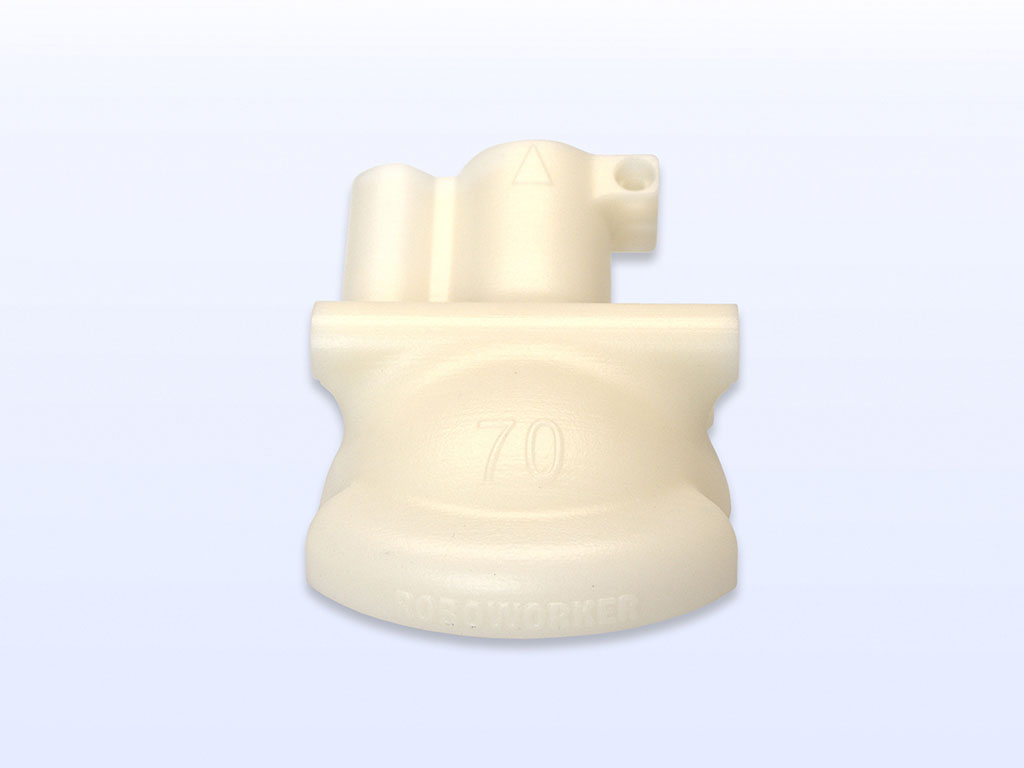
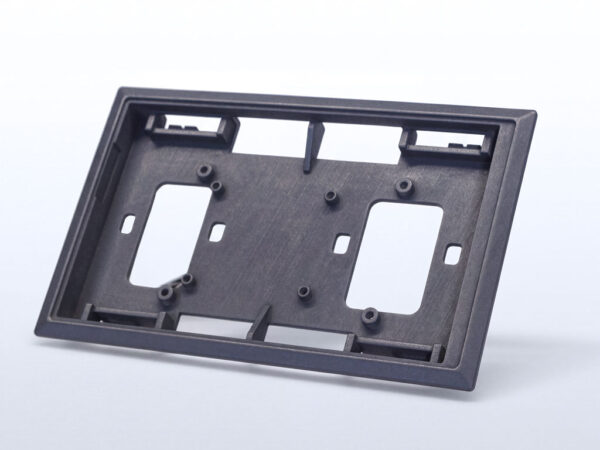
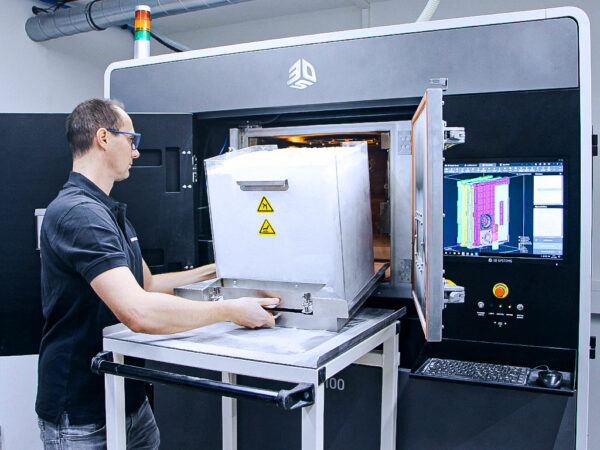
Depending on your requirements, we select the most suitable 3D printing technology and the optimal material for your application. For highly durable, functional plastic components used in mechanical engineering and industrial applications, we primarily rely on Selective Laser Sintering (SLS) with PA12.
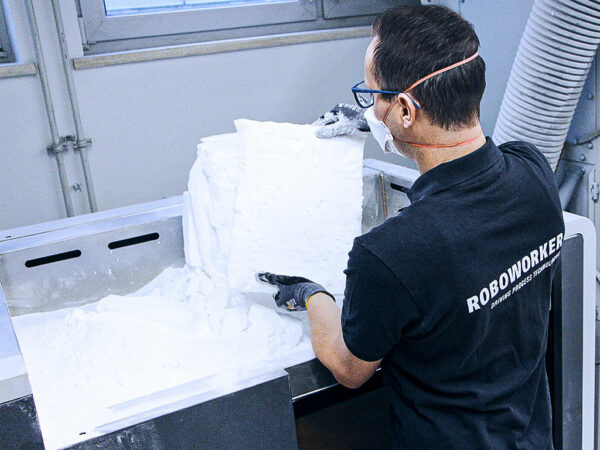
The SLS process requires no support structures, making it ideal for producing complex geometries and wear-resistant components. It is particularly cost-effective for low- to medium-volume production and offers an economical alternative to injection molding.
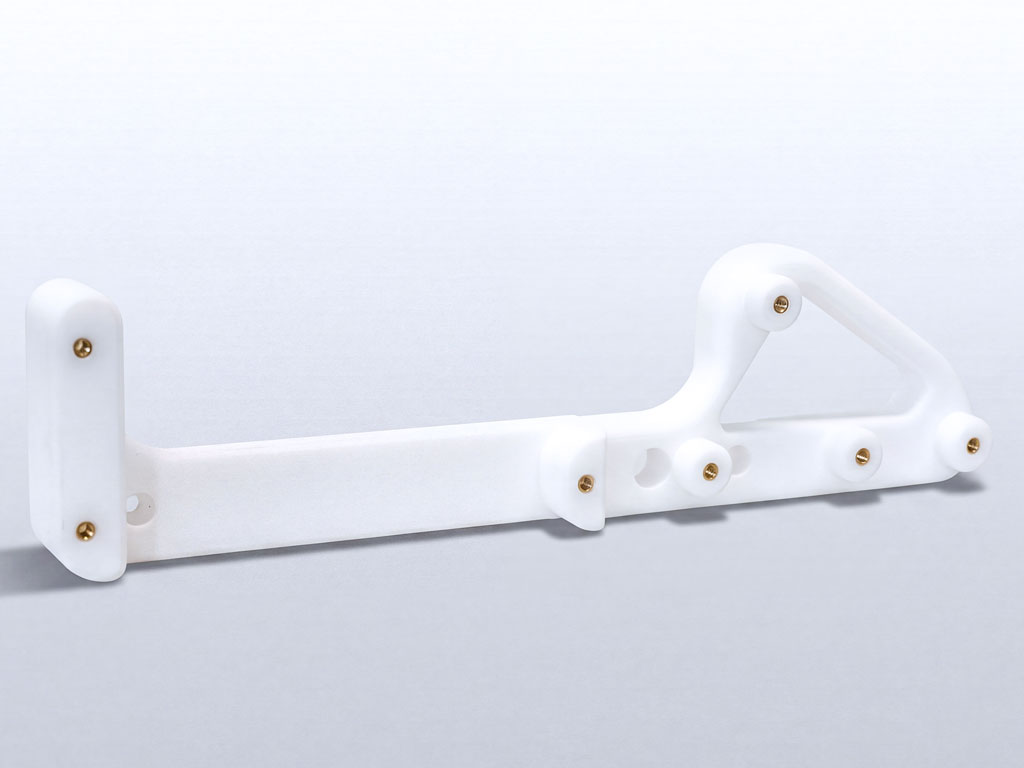
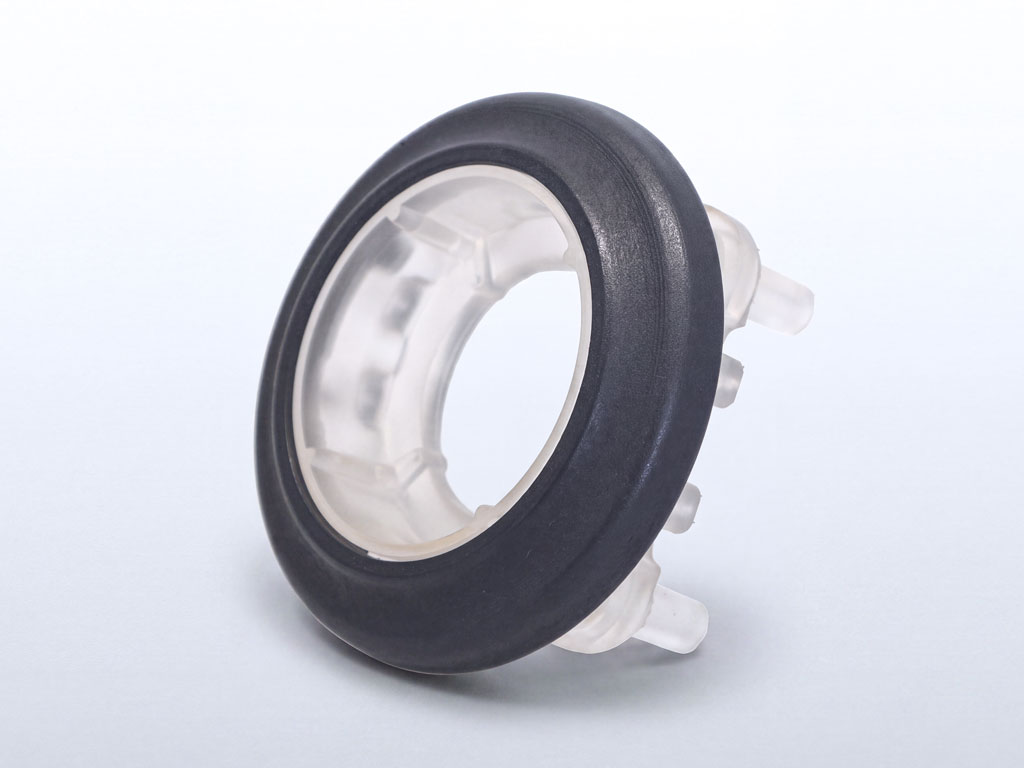
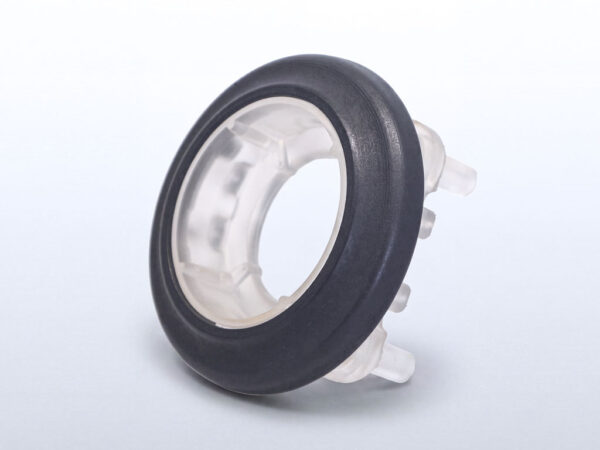
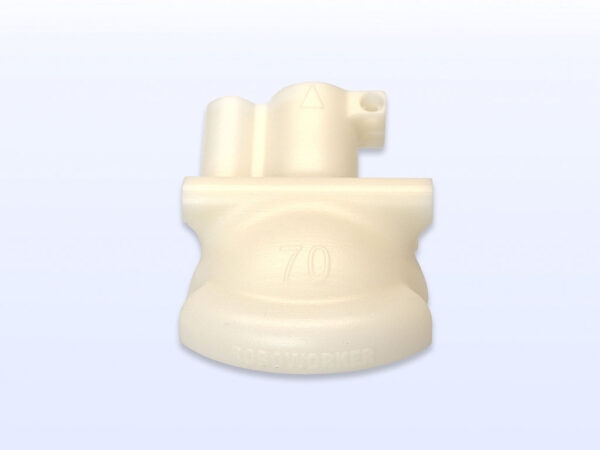
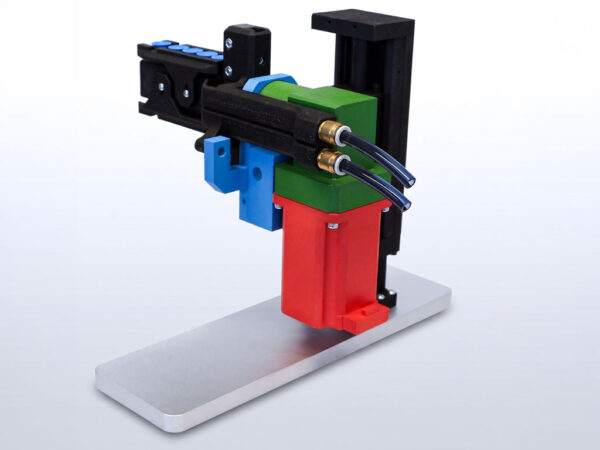
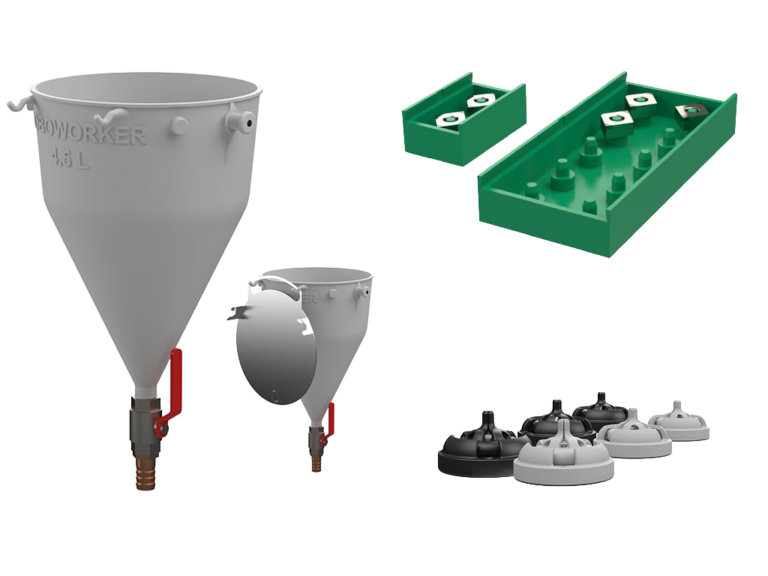
In addition, we utilize Fused Deposition Modeling (FDM) with materials such as PLA, PLA-CF, ESD-safe filaments, and many others, as well as Stereolithography (SLA) with Rigid/Tough, and other engineering resins wherever these technologies provide the greatest advantages. Typical applications include robotic gripper attachments, gripper jaws, vacuum cups, elastic components, and custom functional parts.
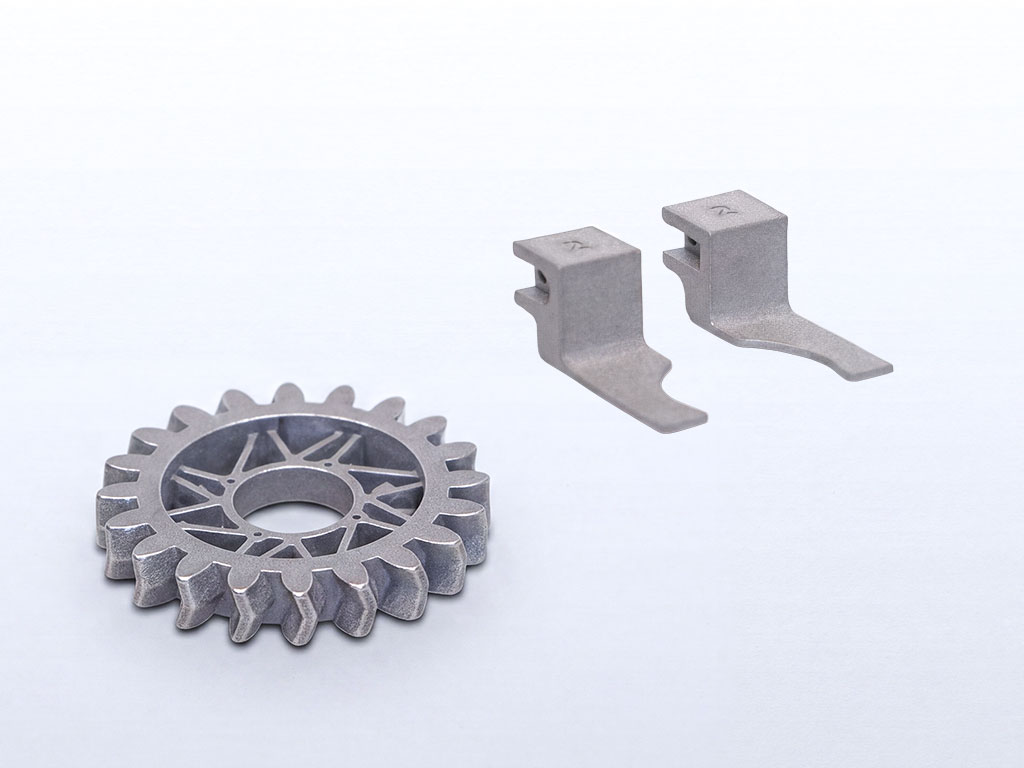
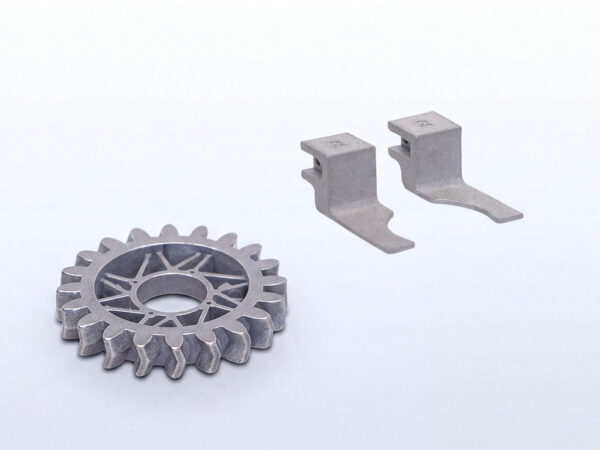
Upon request, we also manufacture metal components using advanced metal additive manufacturing technologies.
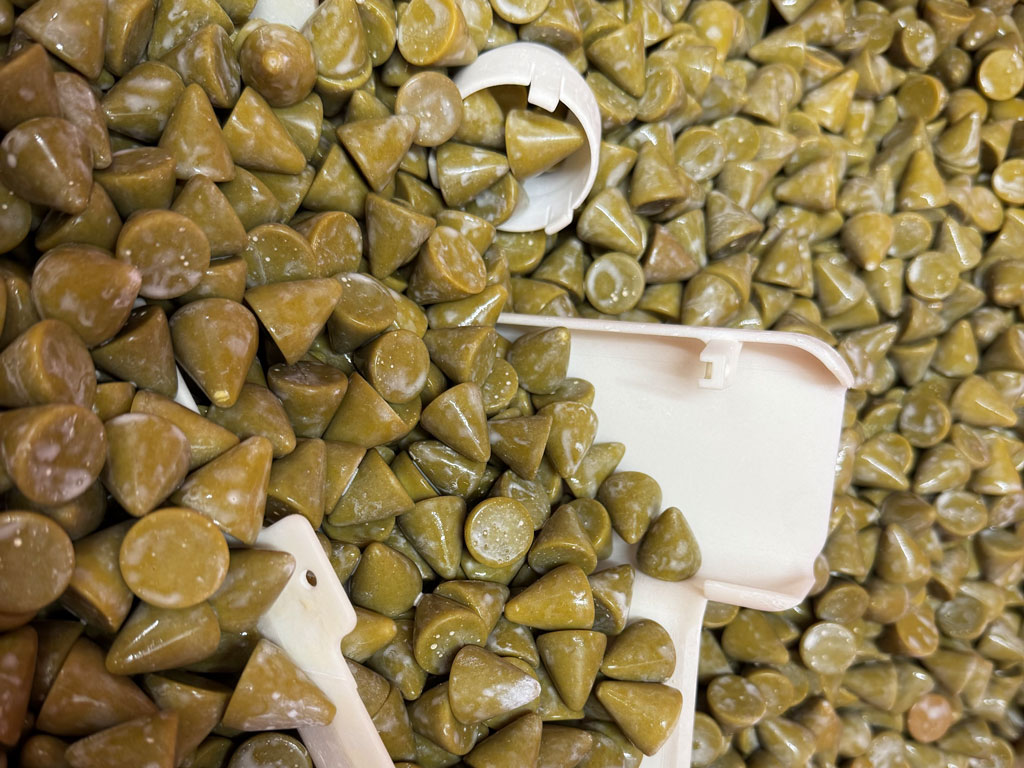
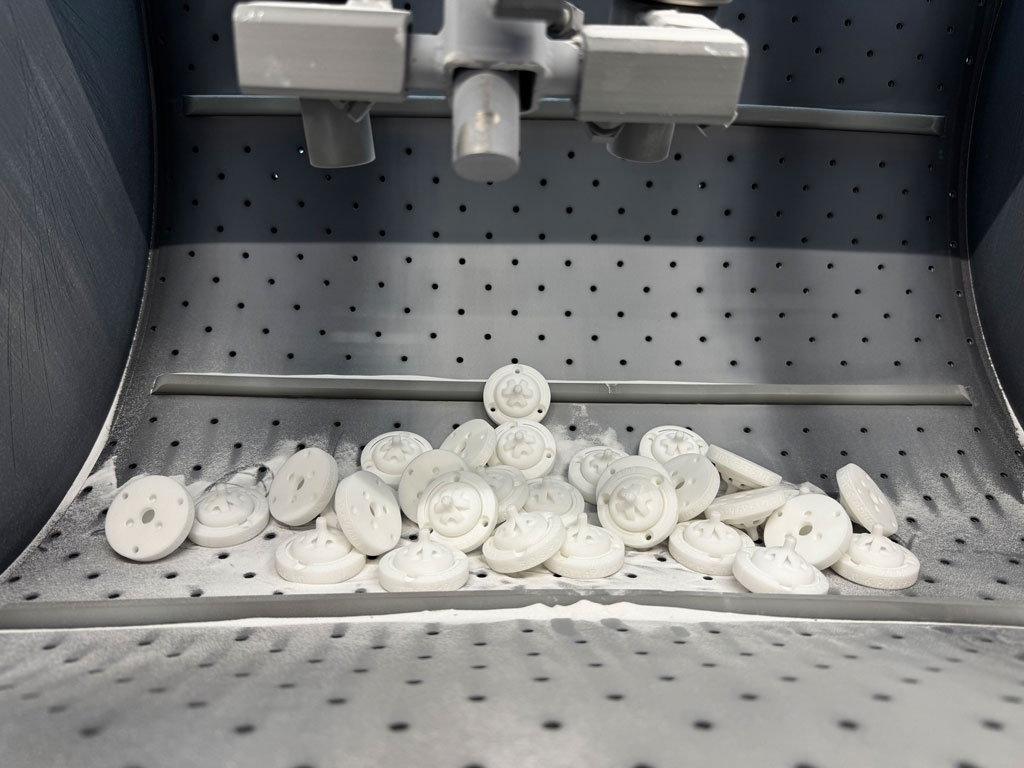
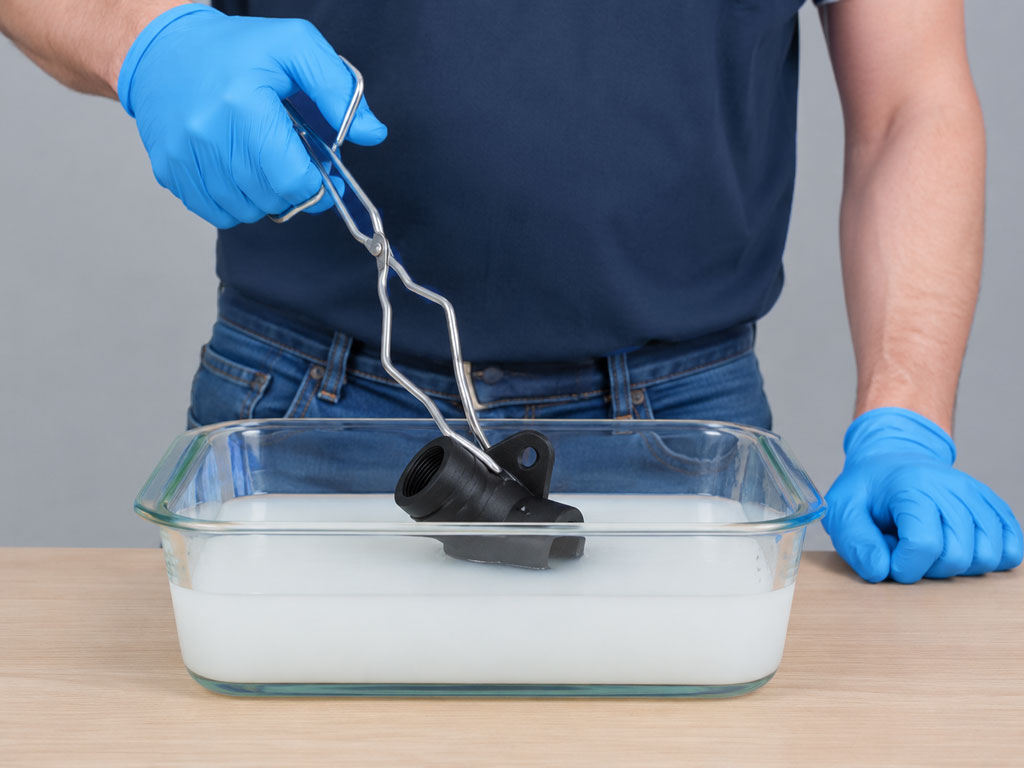
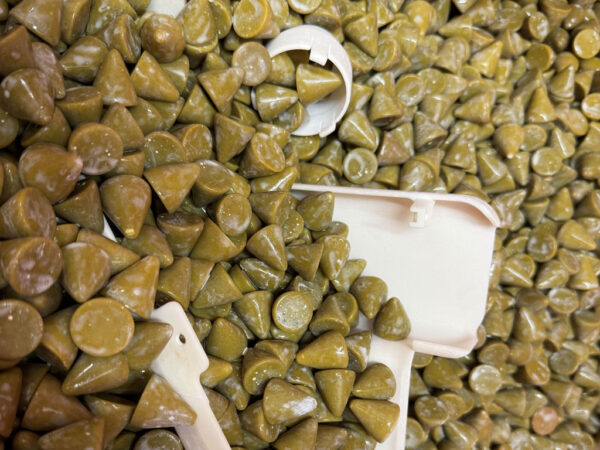
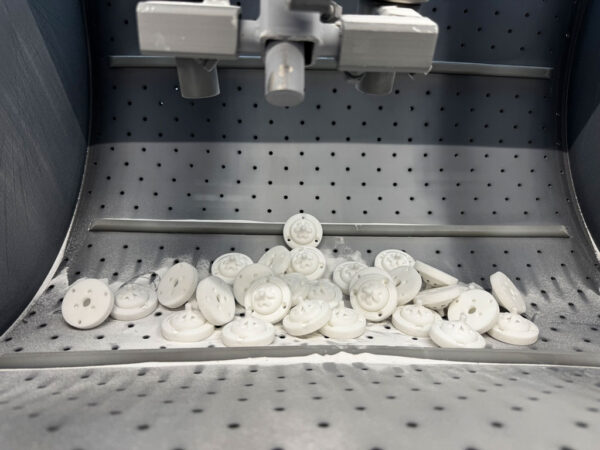
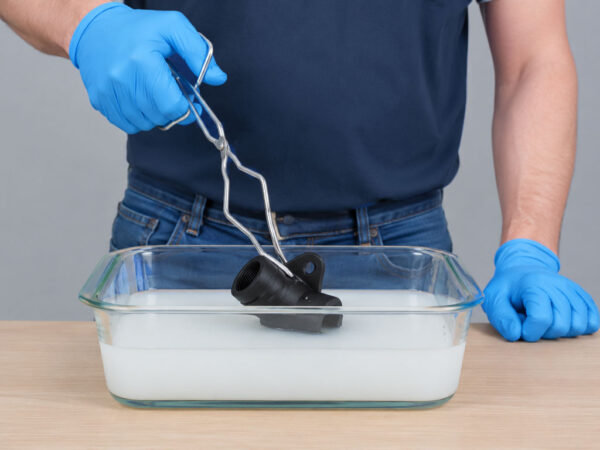
Beyond manufacturing, we offer a range of surface finishing services to further improve the mechanical properties, chemical resistance, and surface quality of 3D printed parts.
Our finishing services include:
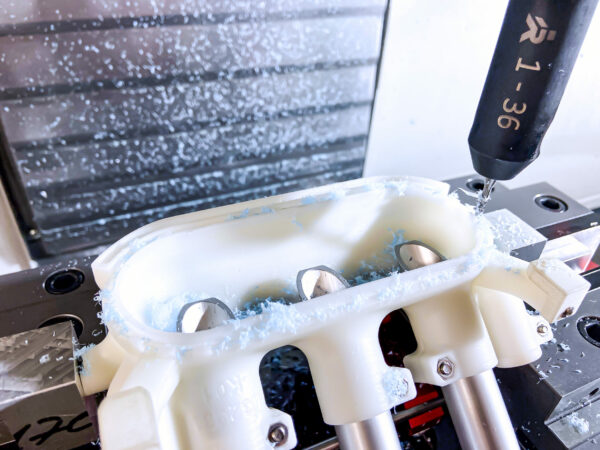
Through machining as a post-processing step, we optimize additively manufactured components to achieve higher dimensional accuracy, improved fits, and enhanced functionality. Holes, mating surfaces, and functional contours are precisely machined and tailored to meet the specific requirements of each application.
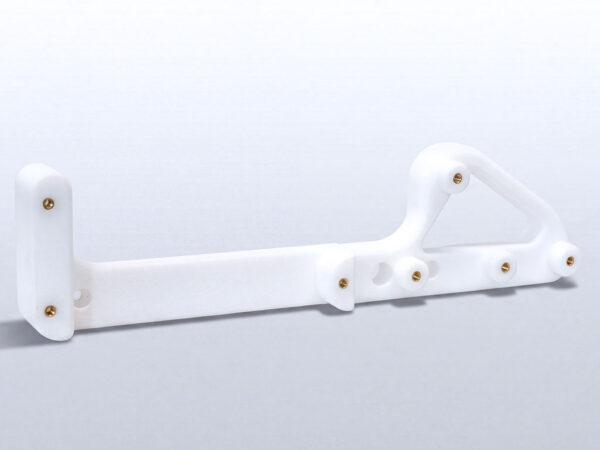
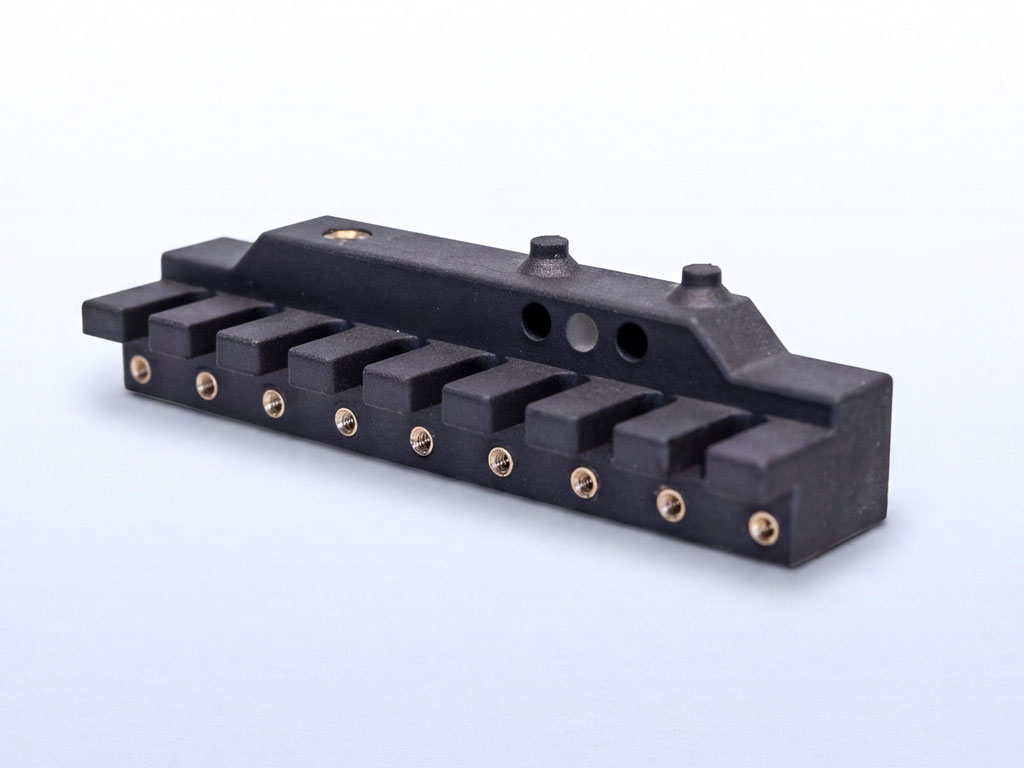
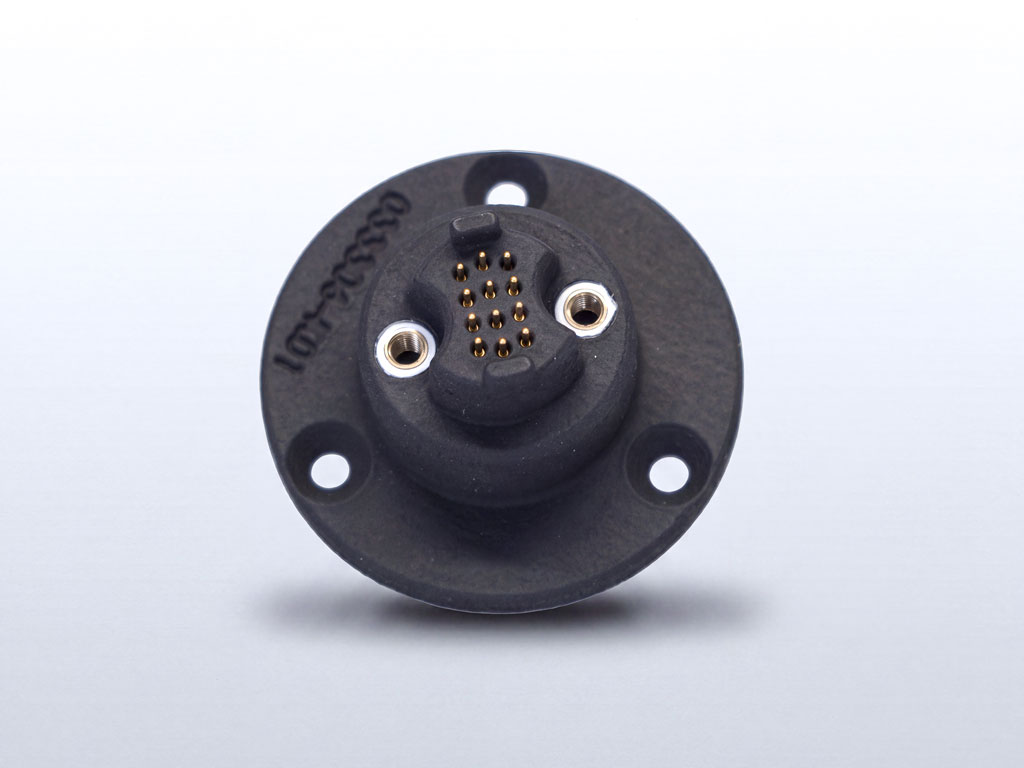
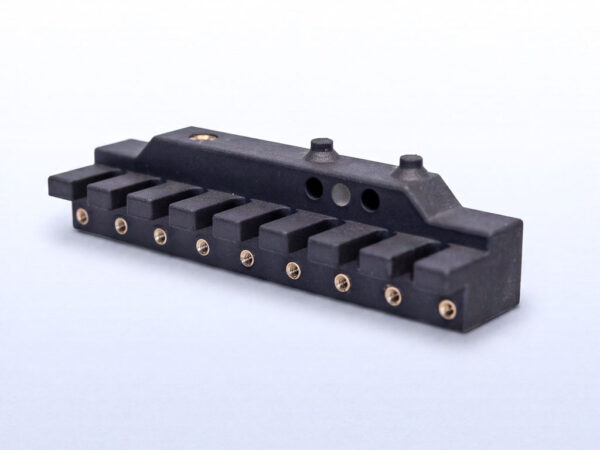
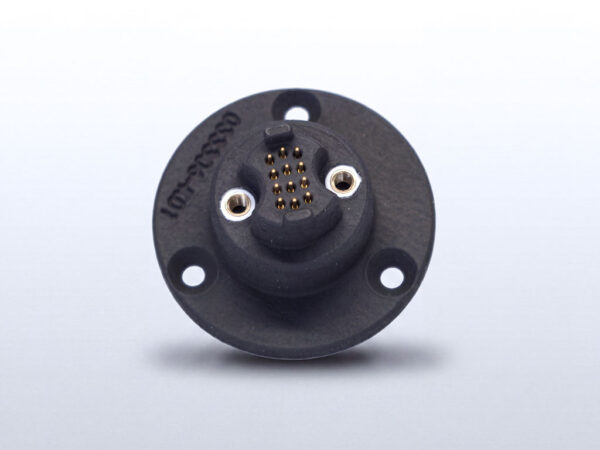
For durable and reliable screw connections, we integrate high-quality threaded inserts into plastic components. These inserts increase the strength, wear resistance, and service life of the parts while enabling secure and repeatable assembly – particularly in mechanical engineering, robotics, and automated production systems.
It is widely recognized that 3D printing offers significant advantages in product development. With the right combination of technology, materials, and expertise, we also manufacture functional production tools and end-use components for industrial applications.

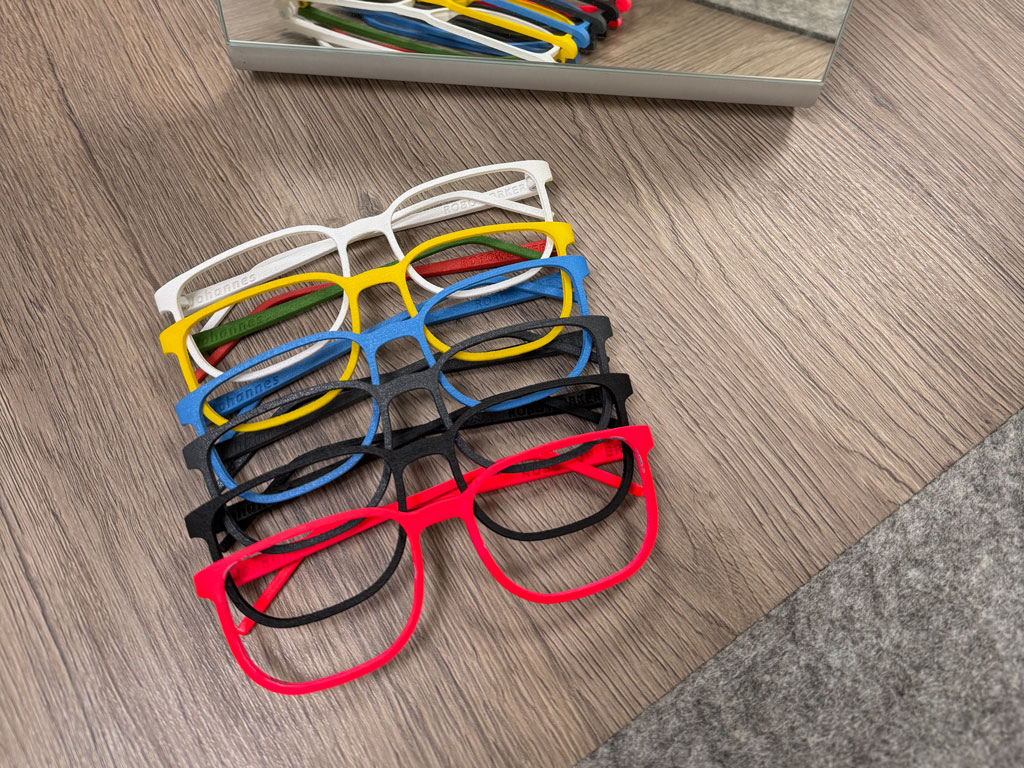
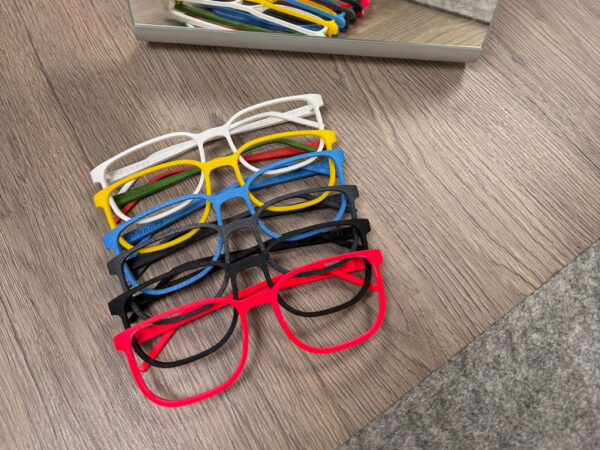
Using state-of-the-art 3D printing technologies, we manufacture high-quality models with an exceptional level of detail. Whether prototypes, functional models, presentation models for exhibitions and trade shows, training applications, or customized one-off solutions – we bring your ideas to life quickly and accurately.
Modern 3D printing processes enable the production of intricate structures and complex geometries that are often difficult or impossible to achieve with conventional manufacturing methods. Even the smallest details can be reproduced with high precision, giving your models a high-quality appearance.
The direct transition from digital CAD data to the finished part eliminates the need for time-consuming tooling or mold production. This allows models and prototypes to be manufactured within a short timeframe.
Every model is manufactured precisely according to your specifications. Whether a single prototype, custom-made part, or low-volume production – 3D printing offers maximum design freedom and enables tailored solutions for a wide range of applications.
Fine structures, internal cavities, organic shapes, and technically demanding components can be efficiently manufactured using additive manufacturing technologies. This enables the production of models that require significant manufacturing effort when using conventional methods.
Design changes can be made directly in the digital CAD model and implemented quickly. New iterations or optimizations can be produced in a short time, accelerating development processes and enabling early visualization of design decisions.
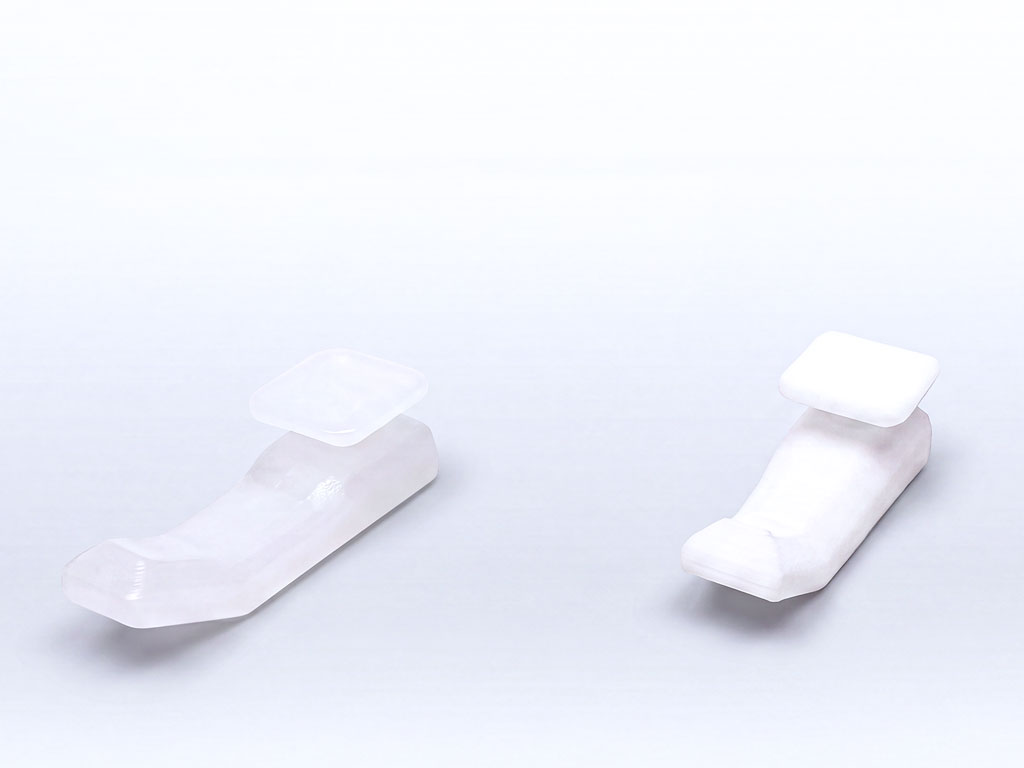
With 3D printing of replacement parts, defective, worn, or no longer available components can be reproduced quickly, precisely, and cost-effectively. Whether everyday items, legacy spare parts, machine components, or customized parts – additive manufacturing provides an alternative to replacement purchases and extends the service life of products and machinery.
Reverse Engineering is used whenever no CAD data or technical drawings are available. The existing component is precisely measured and digitally reconstructed. Based on this CAD model, we manufacture precisely fitting replacement parts using 3D printing – as individual parts or in low-volume production.
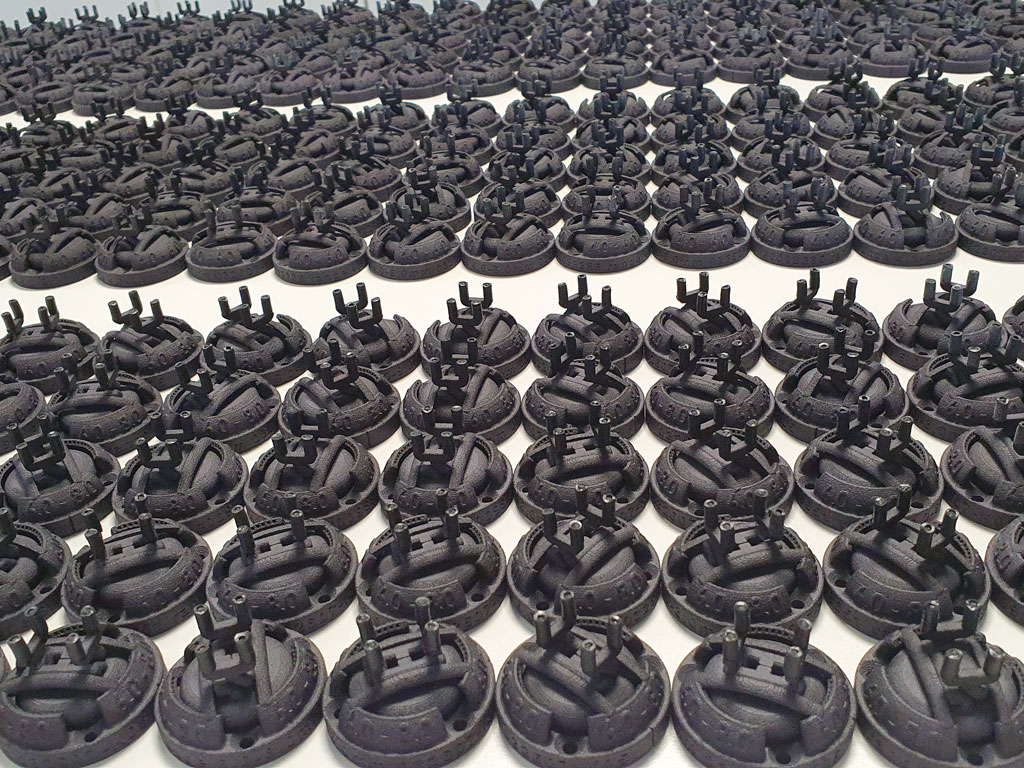
Additive series production is particularly suitable for components with complex geometries as well as small and medium production volumes.
Digital manufacturing processes enable fast production, high repeatability, and flexible adaptation to changing quantities.

Benefit from our expertise and many years of experience: As a full-service provider for additive manufacturing, we support you throughout the entire process – from product development to the production of high-quality 3D-printed components.
Our experienced engineering team supports you with:
Express production is also available at any time.
Contact us – together, we will determine the best solution for your individual requirements. Our team looks forward to your call or written inquiry.

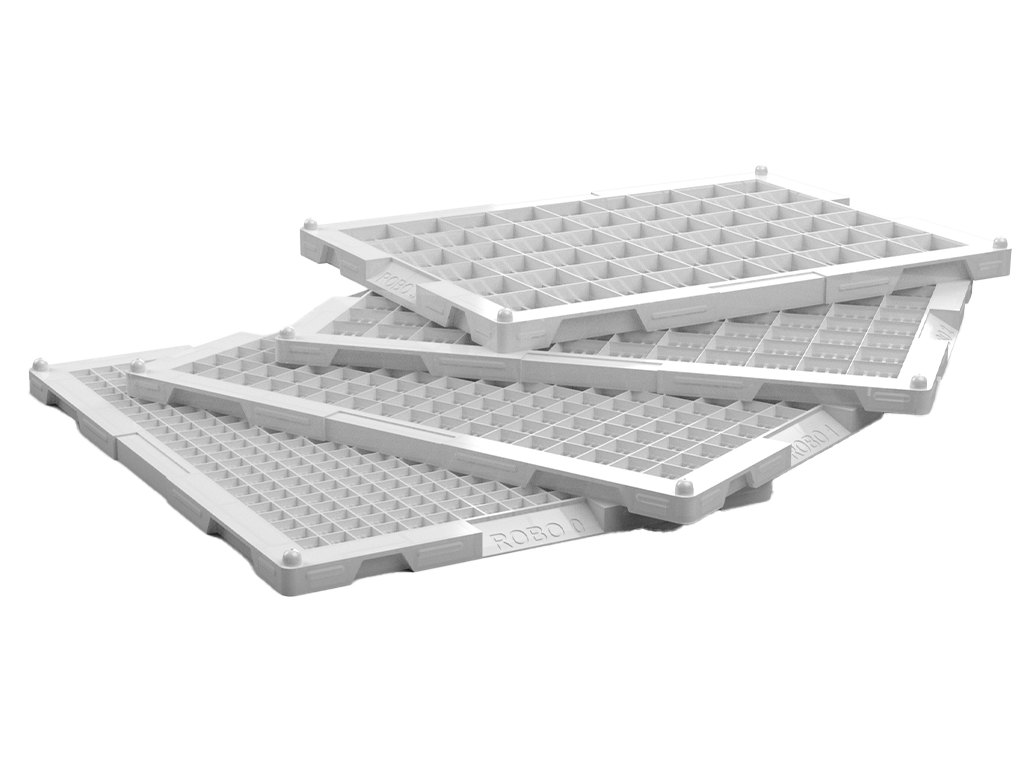

Selective Laser Sintering (SLS) is an additive manufacturing (AM) technology primarily used to create three-dimensional objects by layering material. SLS is commonly utilized in the field of rapid prototyping and the production of functional parts across various industries.
In summary, Selective Laser Sintering is a versatile additive manufacturing technology suitable for a wide range of industries, offering benefits such as rapid prototyping, design flexibility, and the production of complex geometries.
Fused Deposition Modeling (FDM) is an additive manufacturing (AM) technology that uses a thermoplastic filament, which is heated and extruded layer by layer to create a three-dimensional object. FDM, also known as Fused Filament Fabrication (FFF), is primarily used in product development. Due to its low investment and material costs, this method is particularly suited for creating simple prototypes, concept models, and visual aids to convey ideas during the design and development process.
Stereolithography (SLA) is one of the most commonly used 3D printing technologies. This technology is based on photopolymerization, where a light source—either a laser or a projector—is used to cure liquid resin into a solid polymer. SLA is particularly known for its ability to produce high-resolution and finely detailed parts.
In contrast to the SLS process, FDM and SLA technologies are less suitable for producing end-use parts in general mechanical engineering, as the printed components are less mechanically robust. However, there are applications for end-use parts such as gripper attachments, gripper inserts, suction cups or increasingly also elastic components.
Due to the fast production time of 3D printing, parts are available for use in manufacturing more quickly, which also facilitates the optimization and replacement of machine components.
Production costs are largely independent of part complexity. This allows the production tools to be optimally designed to meet the desired requirements without becoming extremely expensive.
Intelligent functional integration, such as springs or hinge joints, reduces the number of parts and thus the administrative effort with ERP systems as well as reducing assembly costs. Additionally, lightweight construction can save material and weight.